




Anorexia Nervosa Treatment: Evidence-Based Adult Guide
- Claire Cashman
- 5 days ago
- 12 min read
Updated: 2 days ago
The belief that anorexia recovery is reserved for adolescents is a profound misconception that often prevents adults from seeking the specialised clinical support they deserve. If you've spent years managing this condition alone, the prospect of change can feel as daunting as the illness itself. You might worry that treatment means a total loss of autonomy or that your local doctor won't truly understand the depth of your experience. When seeking eating disorder treatment on the Sunshine Coast, it's vital to find a stable anchor; a professional partnership that respects your adult life while providing rigorous, evidence-based care.
We understand that navigating the Australian healthcare system can be confusing, especially when you're already under significant emotional stress. This guide offers a clear roadmap to recovery, validating that it's never too late to reclaim your health and vitality. We will explain the clinical efficacy of models like CBT-E, clarify how to access the 40 psychological sessions currently available under 2026 Medicare rebates, and provide practical steps for starting a conversation with your GP. By the end of this article, you'll have a transparent view of the professional pathways that make adult recovery a tangible reality.
Table of Contents
Understanding Anorexia Nervosa in the Adult Context
Anorexia nervosa is far more than a struggle with food or weight. It is a complex psychiatric condition where deep psychological distress manifests through restrictive eating and a distorted body image. While often portrayed as a condition of youth, Understanding Anorexia Nervosa in an adult context requires a nuanced perspective that acknowledges the unique pressures of mature life. Adults aren't just managing school or peer pressure; they're balancing careers, parenting, and long-term health commitments. This means that recovery cannot simply be about weight restoration. It must involve reclaiming a life that feels authentic and sustainable.
A significant barrier for many is the "not sick enough" myth. You might feel that because you haven't been hospitalised or because your weight hasn't reached a certain threshold, you don't deserve specialised support. This is a dangerous misconception. Severity is measured by the mental load the illness imposes and the degree to which it restricts your ability to live freely. Adult recovery often hinges on addressing specific cognitive drivers like perfectionism and an intense need for control. In an adult world that is often unpredictable, the eating disorder can feel like a reliable, albeit destructive, tool for emotional regulation.
The Physical and Cognitive Impact on Adults
The physiological risks for adults are distinct and serious. Long-term restriction can lead to significant declines in bone density, increasing the risk of osteoporosis and fractures. Cardiac health is also a primary concern, as the heart muscle can weaken over time. Beyond the physical, we must consider "starvation syndrome." When the brain is malnourished, it becomes rigid and obsessive. This makes flexible decision-making and emotional regulation incredibly difficult. Effective eating disorder treatment on the Sunshine Coast prioritises a multidisciplinary approach. This ensures your GP and dietitian monitor these physical markers while you engage in the psychological work of recovery.
Why Specialist Clinical Psychology is Essential
Treating anorexia in adulthood requires more than general counselling. It demands a practitioner with a deep understanding of the intersection between eating pathology and personality. Specialist clinical psychology provides the structured, evidence-based frameworks necessary to dismantle long-standing habits. A doctorate-level psychologist is trained to manage the "whole person," including co-occurring conditions that often fuel the eating disorder. For many adults, the illness is a secondary response to earlier life events. Integrating Trauma and PTSD Treatment is often a critical component of a successful recovery plan. This level of expertise ensures that you aren't just treating a symptom, but building a foundation of resilience that lasts a lifetime.
Evidence-Based Clinical Frameworks for Recovery
Recovery for adults is built on a foundation of proven methodology. Enhanced Cognitive Behaviour Therapy (CBT-E) is widely regarded as the gold standard for outpatient care. Unlike generic therapy, CBT-E is "transdiagnostic," meaning it targets the underlying psychological processes common across different eating disorders. For adults seeking eating disorder treatment on the Sunshine Coast, this model offers a structured path that respects their intelligence and life experience. It's not about being told what to do; it's about learning the mechanics of your own mind through evidence-based clinical frameworks for recovery.
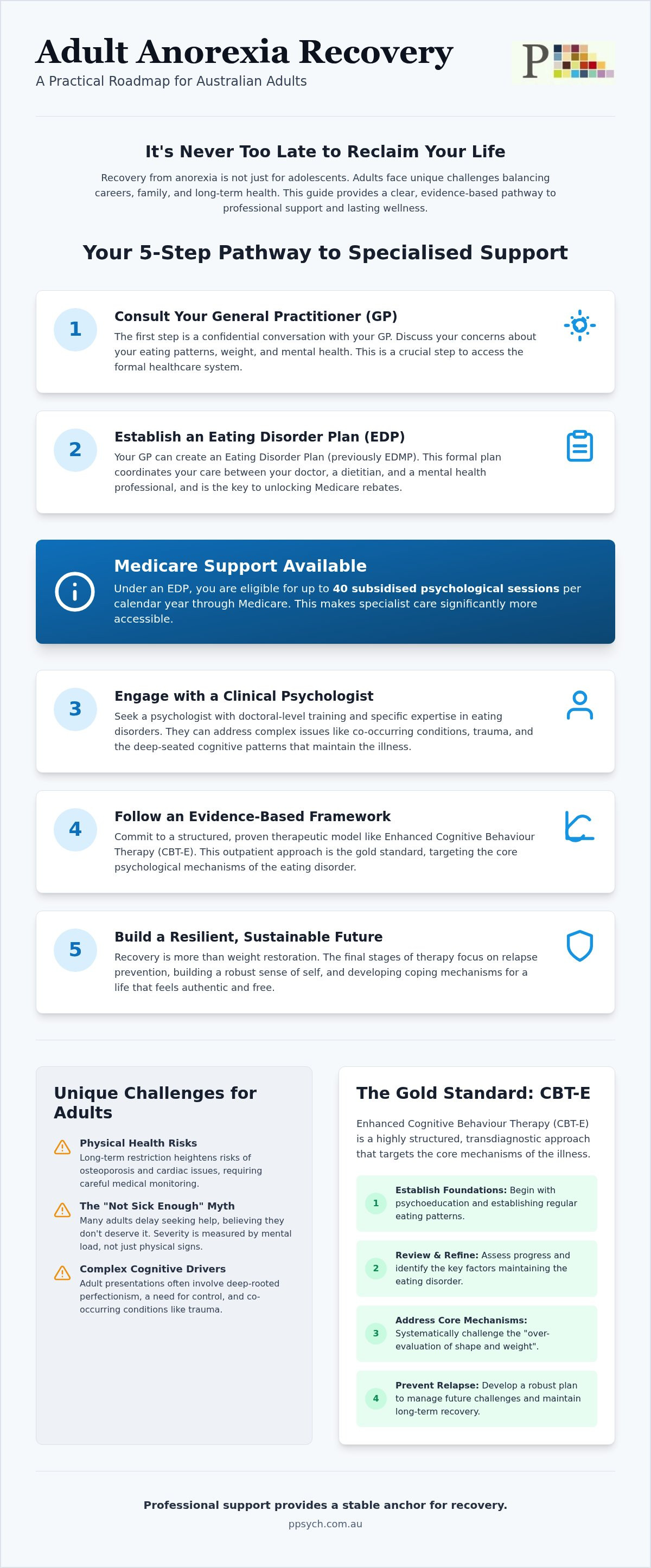
Treatment typically moves through four distinct stages. It begins with establishing a foundation of regular eating and identifying the factors keeping the problem going. Later phases focus on the psychological drivers, eventually concluding with a robust plan for relapse prevention. For individuals who have lived with an eating disorder for many years, Specialist Supportive Clinical Management (SSCM) may be utilised. This approach prioritises medical stability and quality of life, providing a compassionate alternative for chronic cases where traditional recovery goals may need to be more flexible.
The CBT-E Approach: How it Works
At the heart of CBT-E is the concept of "over-evaluation of shape and weight." This is the core mechanism that keeps the illness alive. In clinical sessions, we help you categorise and challenge "eating disorder thoughts" as they occur in real-time. This isn't abstract theory. It's highly practical work that involves in-session planning and real-world application. You'll learn to identify the triggers that lead to restriction and develop a toolkit of responses that don't involve the eating disorder. This process allows you to slowly dismantle the rules that have governed your life, replacing them with flexible, healthy patterns.
Integrating Trauma-Informed Care
Many adults presenting for eating disorder treatment on the Sunshine Coast carry a history of significant life stress or trauma. It's common for the eating disorder to have developed as a way to manage overwhelming emotions. A clinical psychologist can integrate trauma recovery into the treatment plan without compromising the stability of your eating patterns. In modern clinical practice, addressing the intersection of PTSD and eating disorders is considered a clinical priority. This ensures that as you heal your relationship with food, you're also healing the underlying wounds that made the eating disorder feel necessary. If you're ready to explore how these evidence-based models can support your specific journey, professional clinical psychology services are available to guide you through the process.
Outpatient vs. Residential Care: Finding Your Path
Choosing between residential immersion and outpatient care is a significant decision that impacts your finances, your family, and your daily routine. While residential facilities offer a high level of containment, they often require you to step away from your life entirely. Outpatient eating disorder treatment on the Sunshine Coast provides a "real-world" recovery model. This approach allows you to stay in your home and work environment, applying clinical strategies to your actual life as you learn them. According to the National Institute of Mental Health guide to eating disorders, the appropriate setting is determined by your medical stability and the level of psychiatric risk present.
Private clinical psychology acts as a vital bridge in the Australian healthcare landscape. It offers a more intensive, specialised level of care than generalist public services, yet avoids the total disruption of a hospital stay. For many adults, this model is the most effective way to maintain autonomy while receiving the professional guidance needed to challenge the illness. It allows for a steady, methodical transition back to health without the "re-entry" shock that often follows a discharge from a residential facility.
When to Choose Private Outpatient Treatment
Outpatient care is typically the most effective starting point if you are medically stable and have a supportive home environment. One-on-one sessions with a senior clinical psychologist offer a level of individualised attention that group-based hospital settings often lack. This is particularly beneficial for working professionals and parents who cannot leave their responsibilities for months at a time. You can organise your sessions around your career and family, ensuring that recovery integrates into your life rather than pausing it. This consistency helps build a stable anchor during the more turbulent phases of the process.
The Limitations of the 'Quick Fix' Mentality
It's tempting to look for a rapid solution, but simply "eating more" is rarely a sustainable fix on its own. Without deep psychological restructuring, the underlying cognitive drivers of the illness will eventually resurface. Adult treatment typically spans 20 to 40 weeks, depending on the complexity of the presentation. This timeline is necessary to dismantle long-standing eating disorder rules and build a genuine therapeutic alliance. Clinical consistency is paramount. By committing to a longer-term outpatient plan, you're investing in a psychological foundation that supports lasting change rather than a temporary weight gain.
Navigating the Australian Healthcare System
Accessing specialised support in Australia requires a structured approach, but the system is designed to provide sustained, evidence-based care for those who need it most. Your General Practitioner is the essential gatekeeper in this journey. They don't just provide a referral; they oversee your medical safety and coordinate the various professionals involved in your recovery. For many seeking eating disorder treatment on the Sunshine Coast, the first step is often the hardest. Understanding the specific pathways available can help lower the anxiety associated with starting the process.
To begin your treatment journey, follow these five practical steps:
Book a long appointment: Request a double appointment with your GP to ensure there is sufficient time for a thorough assessment.
Clinical Assessment: Your GP will evaluate your symptoms against specific Medicare criteria to determine the most appropriate plan.
Plan Creation: If eligible, your GP will draft an Eating Disorder Management Plan (EDMP) and a formal referral letter.
Specialist Connection: Contact a clinical psychology practice that specialises in adult eating disorders to book your initial intake.
Initial Consultation: Present your EDMP at your first session to begin accessing Medicare rebates immediately.
The Eating Disorder Management Plan (EDMP)
The EDMP is a specific Medicare initiative that provides significantly more support than a standard Mental Health Care Plan. Under the 2026 guidelines, eligible individuals can access rebates for up to 40 psychological treatment sessions and 20 dietetic sessions per calendar year. While a diagnosis of anorexia nervosa provides automatic eligibility, the plan requires a structured review process. Your GP must review your progress after every 10 sessions to "unlock" the next block of rebates. This ensures that your care remains clinically appropriate and that your medical safety is being monitored. For a broader understanding of how these systems work, Trauma Recovery and Medicare offers further insights into navigating rebate structures for complex needs.
Working with a Multidisciplinary Team
Effective recovery is never a solo endeavour. It requires a coordinated effort between your clinical psychologist, your GP, and often an Accredited Practising Dietitian. This team approach ensures that as you do the psychological work, your physical health is closely guarded. Regular medical monitoring, including blood tests and ECGs, is a standard and necessary part of psychological treatment for adults. We recognise that managing these different appointments can feel overwhelming. A high-quality private practice will often take the lead in this coordination, communicating directly with your GP to reduce the administrative burden on you. This allows you to focus your energy entirely on the process of healing. If you are ready to establish your support team, reach out to our clinical team to discuss how we can coordinate your care.
The Professional Psychology Service Approach to Recovery
At Professional Psychology Service, we believe that effective eating disorder treatment on the Sunshine Coast requires a delicate balance of clinical authority and human warmth. Our practice serves as a stable anchor for adults navigating the complexities of anorexia nervosa; a condition that often feels like a turbulent storm. Led by Dr Claire Cashman, a Clinical Psychologist with a Doctorate, our senior clinical team brings deep expertise to complex adult presentations. We operate from a professional clinic in Coolum Beach, providing a calm and reliable environment designed to lower the anxiety often associated with starting therapy. Our commitment to research-backed methodologies, particularly CBT-E, ensures that your recovery is grounded in the most effective evidence-based practices available today.
The personality of our practice is one of quiet strength and unwavering professionalism. We don't just treat symptoms; we focus on the individual's unique journey with a sense of integrity and ethical grounding. Just as technical precision is vital for safety in Australian industry, a standard upheld by specialists like Zenith Sales & Calibrations Pty Ltd, we provide a structured path that helps you move from the chaos of the illness to a state of purposeful stability. This methodical approach allows you to acquire the practical life skills necessary to navigate the world without the eating disorder as a primary coping mechanism.
Individualised Treatment Planning
Taking the First Step
Reclaiming your life from an eating disorder is a significant undertaking, and seeking professional help is a profound sign of strength rather than a loss of control. If you're ready to begin, the process starts with an initial clinical consultation. During this session, we discuss your specific needs and history in a strictly confidential setting, allowing us to determine the most effective roadmap for your recovery. You can contact our clinic directly to organise this appointment and discuss any questions you may have regarding referrals or the EDMP process. We're here to guide you through the clinical pathways we've discussed, ensuring you feel respected, understood, and safely held throughout your journey toward wellness.
Reclaiming Your Future Through Evidence-Based Care
Adult recovery from anorexia nervosa is a clinical reality for those who engage with the right professional frameworks. We've explored how evidence-based models like CBT-E provide a clear roadmap for dismantling rigid eating disorder rules while respecting your autonomy as an adult. By utilising the Eating Disorder Management Plan, you can access the sustained support necessary for long-term healing within the Australian healthcare system. This approach allows you to stay grounded in your daily life, applying new cognitive skills to real-world situations as you progress.
If you're seeking eating disorder treatment sunshine coast, our clinic provides a stable, compassionate anchor for your journey. Our practitioners maintain registration with the Psychology Board of Australia and offer doctorate-level clinical expertise in complex adult presentations. We're committed to the evidence-based CBT-E framework, ensuring your care is both rigorous and deeply human. To discuss your specific needs in a confidential setting, Book a Clinical Consultation with Professional Psychology Service today. Reclaiming your vitality and health is a courageous choice, and we're here to support you in every step toward a sustainable recovery.
Frequently Asked Questions
Can adults fully recover from long-term anorexia nervosa?
Yes, full recovery is possible regardless of how long you have lived with the condition. The brain remains capable of significant change throughout adulthood, and evidence-based treatments like CBT-E are specifically designed to dismantle long-standing cognitive patterns. Recovery is not just about physical restoration; it is about reclaiming your mental freedom and building a life that is no longer dictated by the illness.
Do I need a referral from my GP to see a clinical psychologist for an eating disorder?
You need a formal referral and an Eating Disorder Management Plan (EDMP) from your GP to access Medicare rebates for your sessions. While you are welcome to book an appointment as a private client without a referral, having the correct plan in place ensures you receive the maximum financial support available under the Australian healthcare system. This referral also ensures your GP is involved in your broader medical monitoring.
How many sessions of psychology are covered under an Eating Disorder Management Plan?
Under the 2026 Medicare guidelines, an Eating Disorder Management Plan provides rebates for up to 40 psychological treatment sessions per calendar year. The plan also includes up to 20 sessions with an Accredited Practising Dietitian. These sessions are typically released in blocks of 10, with your GP conducting a brief clinical review between each block to ensure your treatment remains appropriate for your needs.
What is the difference between a clinical psychologist and a general counsellor for anorexia?
Clinical psychologists have completed a minimum of six years of intensive university training, often at a doctorate level, and specialise in treating complex psychiatric conditions. When seeking eating disorder treatment on the Sunshine Coast, choosing a clinical psychologist ensures you are working with a practitioner trained in specific, research-backed protocols like CBT-E. This level of expertise is essential for addressing the deep-seated psychological drivers of the condition with clinical precision.
Is telehealth effective for eating disorder treatment?
Telehealth is a highly effective modality for eating disorder treatment, with clinical research indicating that outcomes for CBT-E delivered online are comparable to face-to-face therapy. It provides a flexible and confidential option for individuals who may have difficulty travelling to a clinic or who simply prefer the safety of their own home. Our practice offers secure telehealth consultations to ensure specialist clinical support is accessible to adults across Australia.
What happens during the first clinical assessment session?
The first session is a thorough assessment where we explore your history, current symptoms, and what you hope to achieve through therapy. We also discuss your physical health and coordinate with your GP to ensure you have a stable multidisciplinary team in place. This initial meeting is an opportunity to build a trusting therapeutic alliance and to create a clear, methodical roadmap for your recovery journey.
Can I still work or study while undergoing outpatient treatment?
Maintaining your career or studies is often a central part of the "real-world" recovery model used in outpatient care. Unlike residential immersion, outpatient eating disorder treatment on the Sunshine Coast allows you to apply clinical strategies directly to your daily life and responsibilities. We work with you to organise a schedule that supports your recovery without requiring you to pause your life or adult commitments.
How do I know if I am 'sick enough' to qualify for a Medicare plan?
If you have a diagnosis of anorexia nervosa, you automatically meet the eligibility criteria for an Eating Disorder Management Plan regardless of your weight or body mass index. The "not sick enough" myth is a common barrier to care, but Medicare eligibility is based on the complexity of the illness and the psychological distress it causes. Your GP will assess your clinical needs to ensure you can access the full 40 sessions of supported treatment.


Comments