




Anxiety Symptoms in Women: A Clinical Guide to Identifying and Managing Distress
- Claire Cashman
- 16 hours ago
- 14 min read
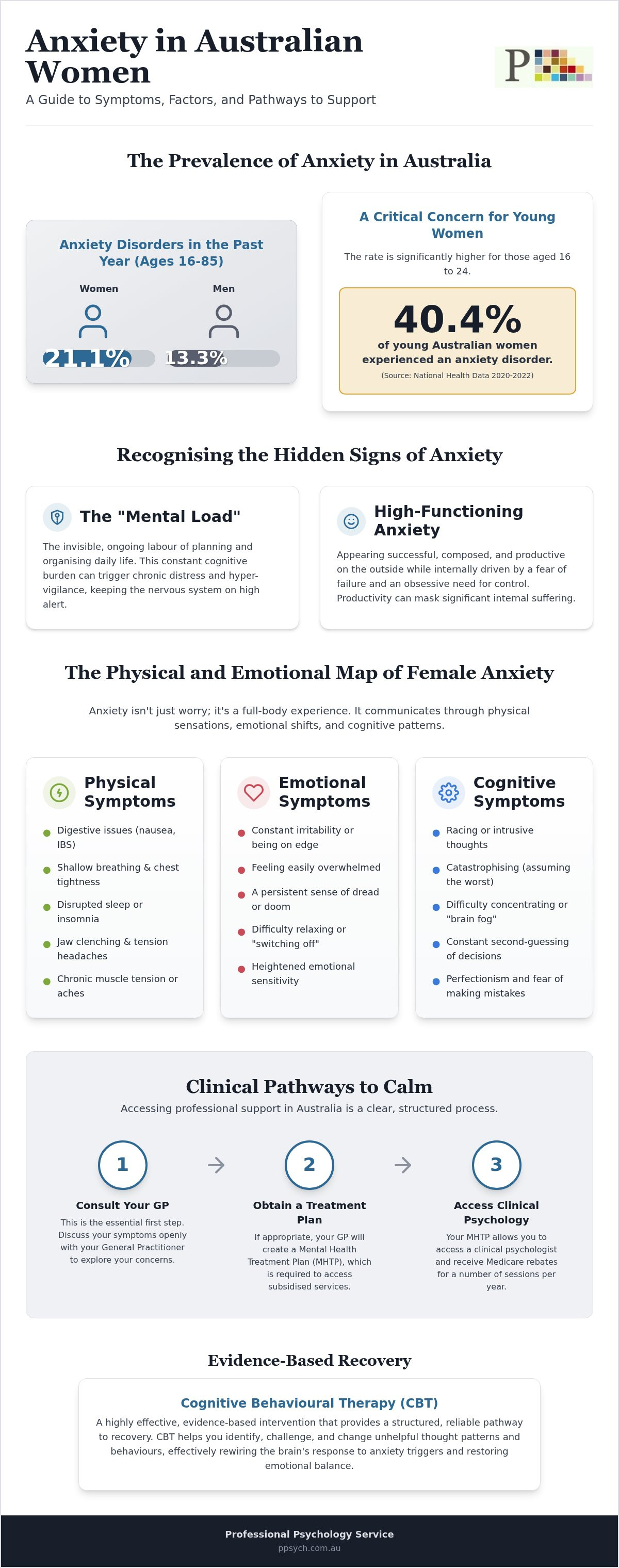
Did you know that 21.1% of Australian women have experienced an anxiety disorder in the past year, a rate significantly higher than the 13.3% reported by men? For many, these feelings don't just manifest as simple worry. They show up as a relentless mental load, unexplained heart palpitations, or a total inability to switch off from family and work demands. Understanding the specific anxiety symptoms in women is the first step toward reclaiming your sense of calm and stability. It's vital to recognise that what you're feeling is a valid clinical experience, not a personal failing or merely the result of a busy lifestyle.
In this guide, we'll provide a clear framework for identifying these emotional and physical signs while outlining evidence-based pathways to recovery. You'll learn how to move through the Australian healthcare system, from obtaining a Mental Health Treatment Plan through your GP to understanding how Medicare rebates support your access to clinical psychology. We'll move from validating your current experience to providing a concrete, professional roadmap for seeking the high-quality care you deserve.
Table of Contents
Beyond Worry: Recognising Anxiety Symptoms in Women
Life in Australia moves fast, and it's natural to feel the pressure of a looming deadline or a complex family event. However, there's a distinct line between situational stress and a clinical condition. While stress usually dissipates once the external trigger is gone, clinical anxiety remains as a persistent state of apprehension that interferes with your daily functioning. For a comprehensive overview of anxiety disorders, it's helpful to view them as a range of conditions where the body's 'alarm system' stays switched on even when no immediate threat exists.
The statistics tell a compelling story about the female experience in Australia. Between 2020 and 2022, 21.1% of Australian women aged 16 to 85 experienced an anxiety disorder, compared to just 13.3% of men. For younger women aged 16 to 24, that figure jumps to a staggering 40.4% according to national health data. These aren't just numbers. They represent millions of women living in a world that often demands they carry a heavier psychological weight.
The "Mental Load" and Its Impact on Wellbeing
The mental load is the invisible labour of planning and organising every facet of daily life. For many women, this cognitive burden isn't just a list of chores; it's a constant background hum that can trigger chronic distress. This often leads to a state of hyper-vigilance, where you're constantly scanning for potential problems regarding family safety, social roles, or household management. When your brain is always 'on' and focused on the needs of others, the nervous system eventually struggles to return to a baseline of calm. This chronic state of 'doing' can eventually manifest as the primary anxiety symptoms in women, even if it feels like you're just being responsible.
Establishing long-term financial security is a proactive way to reduce this cognitive burden; you can learn more about Financial Mentors Wealth Management to see how professional wealth creation strategies can help provide the certainty and stability needed to ease a persistent mental load.
Reducing this mental load often involves delegating routine chores; for instance, if you have a swimming pool, you can learn more about expert maintenance services that help streamline your household responsibilities.
For those who find that physical limitations add to this mental load, finding ways to simplify daily tasks is crucial. Mobility and You provides a range of daily living products that can help reduce the physical effort required for everyday activities, allowing for a more manageable routine.
High-Functioning Anxiety: The Hidden Struggle
A significant gap in many health discussions is how anxiety symptoms in women often present as high-functioning perfectionism. You might be the person who never misses a deadline, maintains an immaculate home, and never says 'no' to a request. On the outside, you appear incredibly successful and composed. On the inside, you're driven by an obsessive need for order and a paralysing fear of failure.
This 'over-functioning' is a common way women mask their internal distress. Because our culture rewards this level of productivity, many women delay seeking clinical support. They believe that if they're still performing well at work or home, they aren't 'anxious' enough to need help. It's vital to realise that being productive doesn't mean you aren't suffering. Clinical support is about the quality of your internal life, not just how much you can tick off your to-do list.
The Physical and Emotional Map of Female Anxiety
Anxiety is rarely a silent experience. It often manifests as a loud, physical presence that communicates through the body long before it is recognised by the mind. Because the female nervous system often processes threat signals with heightened sensitivity to social and environmental cues, the symptoms can be diverse and deeply integrated into daily life. It's very common for Australian women to consult a GP for persistent physical ailments like digestive distress or chronic fatigue before the underlying clinical anxiety is identified. According to the World Health Organization’s Anxiety disorders fact sheet, these conditions are more prevalent in women, yet the physical "map" of this distress is often misunderstood or dismissed as general stress.
To gain clarity, it's helpful to categorise your experiences into physical, emotional, and cognitive domains. We encourage you to track these sensations over a full month. This allows you to see if your anxiety symptoms in women correlate with specific work cycles, family demands, or hormonal shifts, providing a clearer picture for your healthcare provider.
Somatic Symptoms: How Anxiety Speaks Through the Body
The "fight or flight" response is a survival mechanism that prepares the body for action. When this system stays active for too long, it leads to chronic muscle tension. You might notice you're clenching your jaw during the day or waking up with tension headaches. Alongside psychological support, gentle wellness care from Livelovelife Chiropractic can help alleviate this physical strain, and you can also discover Active Footcare for expert podiatry if you find that tension is impacting your foot health. Anxiety can also exacerbate pre-existing conditions like migraines or fibromyalgia. Common somatic signs include:
Digestive issues, such as nausea or irritable bowel symptoms.
Shallow breathing and a persistent feeling of chest tightness.
Disrupted sleep or difficulty falling asleep due to physical restlessness.
Heart palpitations that feel like a racing or fluttering pulse.
Cognitive and Emotional Signs: The Internal Dialogue
While the body reacts, the mind often engages in an exhausting internal dialogue. Catastrophising is a hallmark of this experience. This is the habit of jumping to the worst-case scenario regarding your family, career, or health. It isn't a choice; it's a symptom of a brain trying to protect itself from perceived danger. You might also experience "brain fog," where intrusive worries make it nearly impossible to concentrate on simple tasks or follow a conversation. This often leads to a feeling of emotional brittleness. You may find yourself becoming unusually irritable or snappy with loved ones, which is frequently just a mask for the underlying fear and exhaustion you're carrying.
If you find that your physical health and emotional stability are constantly at odds, it may be time to seek a formal assessment. Professional clinical psychology for adults can help you decode these signals and develop practical strategies to regulate your nervous system. By identifying the patterns in how your body and mind react to pressure, you can begin the process of returning to a state of calm reliability.
Biological and Social Factors: Why Women Experience Anxiety Differently
Anxiety isn't a character flaw or a sign of being unable to "cope" with life. It's often a physiological response to complex biological and social environments. For women, the brain's fear centre, known as the amygdala, is significantly influenced by fluctuating levels of oestrogen and progesterone. These hormones play a crucial role in regulating mood and the stress response. When levels shift rapidly, the nervous system can become hyper-reactive. This biological vulnerability explains why anxiety symptoms in women can feel more intense or unpredictable during specific life stages, such as the postpartum period or perimenopause.
Beyond biology, we must look at the social architecture of women's lives. The pressure to "have it all"—balancing professional excellence with intensive domestic management—creates a state of chronic psychological strain. This isn't just about being busy. It is about the cumulative toll of meeting unrealistic societal expectations while often lacking adequate structural support. Research provided in this Anxiety disorders in women overview highlights how these social roles, combined with biological factors, contribute to the higher rates of diagnosis seen across Australia.
The Intersection of Hormones and Anxiety
Many women notice their anxiety symptoms in women peak in the days leading up to their period. While some experience Premenstrual Syndrome (PMS), others may face Premenstrual Dysphoric Disorder (PMDD). This is a severe clinical condition that requires a different therapeutic approach than Generalised Anxiety Disorder (GAD). If you notice a cyclical pattern to your distress, it's helpful to discuss these hormonal links with a clinical psychologist. They can help you map these fluctuations to ensure your treatment plan accounts for your unique biological rhythm and provides targeted relief during vulnerable phases of your cycle.
Trauma and Its Long-Term Psychological Footprint
Past experiences play a fundamental role in how the brain perceives current threats. If you've experienced significant adversity or interpersonal trauma, your nervous system may have become "sensitised." This means it remains in a state of high alert even when you're technically safe. This is why Trauma and PTSD Treatment is often a necessary component of comprehensive anxiety management. Trauma-informed care differs from standard anxiety treatment by focusing on the "why" behind the nervous system's reactivity. It ensures that the root cause of the distress is addressed with compassion and clinical precision, rather than just managing the surface-level symptoms.
This level of specialised care is also critical for those whose anxiety is compounded by their gender journey. If you identify as gender-diverse and are seeking a safe space for therapy, you can learn more about Gender Identity Center to find clinicians who specialise in identity-affirming mental health support.
When to Seek Professional Support in Australia
If your tracking reveals that anxiety symptoms in women are persisting for more than a few weeks or are beginning to restrict your ability to engage with life, it's time to seek a formal clinical assessment. While self-education is a powerful tool, a professional diagnosis ensures that your treatment plan is tailored to your specific neurobiology and life circumstances. Clinical intervention is particularly urgent if you experience "red flag" symptoms, such as recurring panic attacks, thoughts of self-harm, or a total inability to manage daily responsibilities like work or parenting.
Understanding the roles of different healthcare providers is essential for navigating your recovery. Your GP acts as the primary gatekeeper to the mental health system. A Clinical Psychologist, such as the senior clinicians at our practice, specialises in delivering evidence-based psychological therapies for complex distress. In contrast, a Psychiatrist is a medical doctor who focuses on the biological aspects of mental health and may prescribe medication. This integrated model of care is widely supported by international clinics, such as Hope Therapy Center, who provide both psychiatric and therapeutic support. Seeking a professional diagnosis protects you from the pitfalls of self-diagnosis, which often misses the nuances of how anxiety intersects with other health conditions.
Navigating Medicare and Mental Health Care Plans
Accessing support in Australia is a structured process designed to make clinical care more affordable. To begin, book a long appointment with your GP to discuss a Mental Health Treatment Plan (MHTP). This plan allows you to access up to 10 rebated psychology sessions per calendar year. As of July 1 2026, the Medicare rebate for a session with a clinical psychologist is $149.05, significantly reducing your out-of-pocket expenses. For those researching the costs of private psychiatric care, it can be useful to explore Professional Mental Health Service Fees to gain insight into how specialist mental health services are valued internationally. For a more detailed breakdown of Australian entitlements, you can read our guide on Trauma Recovery and Medicare: A Guide to Clinical Psychological Support.
Choosing the Right Clinical Psychologist
The "clinical" endorsement is a protected title in Australia, signifying that the psychologist has completed advanced, doctoral-level training in the assessment and treatment of mental health disorders. Dr Claire Cashman and her team exemplify this level of expertise, providing a stable anchor for women navigating significant distress. Beyond qualifications, the "therapeutic alliance"—the sense of trust and safety you feel with your practitioner—is the strongest predictor of successful recovery. Always ensure your psychologist is registered with the Psychology Board of Australia through AHPRA to guarantee they meet the highest ethical and professional standards.
Before your first appointment, it's helpful to prepare a brief list of your primary concerns and any physical symptoms you've noted. This helps your clinician build an accurate map of your experience from the very first session. If you're ready to take this step, you can explore our services in clinical psychology for adults to find a practitioner who aligns with your needs.
Clinical Pathways to Calm: Evidence-Based Recovery
Recovery from clinical distress is not a process of "fixing" something that is broken. Instead, it is a journey of building psychological resilience and forming new neural pathways. While the biological and social factors we discussed previously can create a heightened state of alert, the brain possesses a remarkable capacity for change. This neuroplasticity allows you to move from a state of constant apprehension back to a baseline of calm reliability. Evidence-based treatment provides the tools to manage anxiety symptoms in women by addressing both the cognitive patterns and the physical "map" of distress in the body.
In addition to structured therapy, mindfulness and grounding techniques play a vital role in managing acute sensations. When you feel the physical signs of a racing heart or shallow breathing, grounding exercises help tether your nervous system to the present moment. This prevents the "fight or flight" response from escalating into a full panic cycle. Over time, these practices work alongside clinical interventions to help you reclaim a sense of agency over your emotional life.
Complementing these techniques with professional physical care, such as that offered by Golden Bay Chiropractic Works, can further assist in releasing the deep-seated muscle tension and postural strain caused by long-term anxiety.
Incorporating specialised physical therapies can further support this recovery process; for tailored exercise physiology and clinical Pilates, you can check out MoveMed to help manage the somatic symptoms of anxiety and restore physical balance.
In addition to physical therapies, supporting your body's nutritional needs can be a helpful adjunct; you can discover Relieve Therapeutics for Australian-supplied PEA supplements that may assist in managing the physical toll of persistent anxiety.
The Role of CBT in Reshaping Thought Patterns
Cognitive Behavioural Therapy (CBT) remains the gold standard for treating anxiety. This approach focuses on the relationship between your thoughts, feelings, and behaviours. By identifying and challenging irrational beliefs, such as the need for perfection or the habit of catastrophising, you can begin to dismantle the internal dialogue that fuels distress. CBT is a collaborative, skills-based approach that empowers you with practical strategies for daily life.
Exposure therapy, when conducted in a gentle and supportive clinical context, is also highly effective for social or situational anxieties. Rather than avoiding the things that cause fear, you learn to approach them in a controlled, gradual way. This process helps your brain learn that these situations are not as dangerous as the "alarm system" suggests. It is about expanding your world again, one steady step at a time, with the guidance of a professional clinician.
The Professional Psychology Service Approach
At our practice, we are committed to providing evidence-based, compassionate care that acknowledges the unique complexities of the female experience. Led by Dr Claire Cashman, our team of senior clinicians serves as a stable anchor for women navigating the turbulent waters of anxiety and trauma. We understand that your journey is personal, and we tailor our clinical methods to meet your specific needs and life stage.
We recognise that many women lead busy lives with significant professional and family commitments. To ensure high-quality care is accessible, we offer telehealth consultations to women across Australia. This allows you to engage in meaningful, doctoral-level psychological support from the safety and privacy of your own home. We invite you to take the first step towards a calmer, more grounded life by reaching out for a consultation. You don't have to carry the mental load alone; professional support is available to help you find your way back to stability.
Your Journey Toward Lasting Stability
Recognising that your experiences are valid is the foundation of recovery. Whether you've been navigating the invisible mental load or managing high-functioning perfectionism, understanding the unique anxiety symptoms in women allows you to move from confusion to clarity. You now know that these feelings are deeply connected to your biological rhythms and social environment, and that a professional clinical pathway exists within the Australian healthcare system to support you.
Recovery isn't about eliminating every stressor; it's about building the resilience and skills to manage them effectively. Our practice, led by Dr Claire Cashman, provides doctoral-level expertise in evidence-based trauma and anxiety treatment. We offer a stable anchor for those seeking progress through proven methodologies like Cognitive Behavioural Therapy. With telehealth available Australia-wide, high-quality clinical support is accessible regardless of your location or schedule.
If you're ready to transition from merely "coping" to truly thriving, we invite you to enquire about a clinical consultation with Professional Psychology Service. You don't have to carry this burden alone; a calmer, more grounded future is well within your reach.
Frequently Asked Questions
How do I know if my anxiety is "bad enough" to see a psychologist?
If anxiety interferes with your ability to enjoy life or perform daily tasks, it is "bad enough" to seek support. You don't need to wait for a crisis to benefit from clinical psychology. Early intervention often leads to faster recovery. If you find yourself constantly managing a mental load that feels heavy or if your sleep is consistently disrupted, professional guidance can provide the stability you need.
Can hormones cause sudden onset anxiety in women?
Hormonal fluctuations are a significant trigger for sudden onset anxiety. Rapid changes in oestrogen and progesterone during perimenopause, the postpartum period, or even specific phases of the menstrual cycle can sensitise your nervous system. These biological shifts directly impact the brain's fear centre. Understanding this link helps validate your experience as a physiological event rather than a personal struggle with coping.
What is the difference between a panic attack and an anxiety attack?
A panic attack is a sudden, intense surge of fear that peaks within minutes, while an "anxiety attack" is typically a gradual build-up of persistent worry. Panic attacks often include sharp physical symptoms like heart palpitations or a fear of losing control. While "anxiety attack" isn't a formal clinical term, it's often used to describe the prolonged, exhausting distress that characterises many anxiety symptoms in women.
How long does it usually take to see results from anxiety therapy?
Most individuals begin to notice meaningful progress within 6 to 10 sessions of evidence-based therapy. However, the timeline for recovery is deeply personal and depends on the complexity of your situation. Because Cognitive Behavioural Therapy is a skills-based approach, you may feel an increased sense of agency quite early as you begin to apply new grounding and cognitive restructuring techniques to your daily routine.
Will I have to take medication if I see a clinical psychologist?
You won't be required to take medication as part of your treatment with a clinical psychologist. Our focus is on providing evidence-based psychological therapies that help you rewire your response to stress. While we don't prescribe medication, we can work collaboratively with your GP if a combined approach is deemed the most effective pathway for your specific clinical needs and long-term wellbeing.
What should I do if I feel a panic attack coming on right now?
If you feel a panic attack beginning, the most effective immediate action is to ground yourself in the present moment. Try the "5-4-3-2-1" technique: identify five things you can see, four you can touch, three you can hear, two you can smell, and one you can taste. Slowing your exhale to be longer than your inhale also signals to your nervous system that you are safe and the feeling will pass.
Can I get a Medicare rebate for online psychology sessions?
Yes, you can access the same Medicare rebates for telehealth sessions as you would for in-person consultations. As of 2026, the Australian government continues to support online psychology to ensure equitable access to care. You'll simply need a valid Mental Health Treatment Plan from your GP to claim the rebate for sessions with a clinical psychologist, regardless of where you live in Australia.
Is it normal for anxiety to feel like a physical illness?
It is entirely normal for anxiety symptoms in women to feel like a physical illness. The "fight or flight" response releases hormones that affect your digestion, muscle tension, and heart rate. This is why many women experience chronic headaches, jaw pain, or irritable bowel symptoms alongside their emotional distress. These physical signals are your body's way of communicating that your nervous system is under sustained pressure.


Comments