




Anxiety Attack vs Panic Attack: Understanding the Key Differences
- Claire Cashman
- 3 days ago
- 13 min read
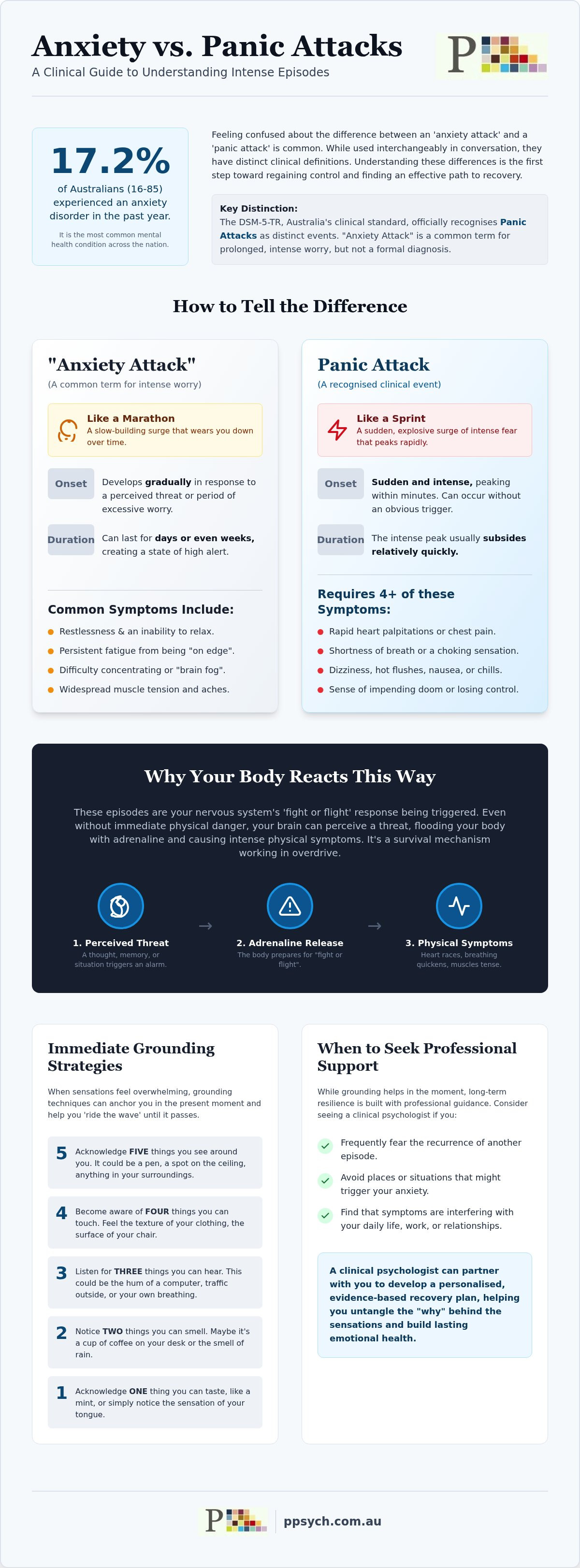
Have you ever felt your heart race so fast you were certain it was a medical emergency, only to be told later it was "just" stress? It's incredibly disorienting to feel your body spiralling out of control while you're unsure if you're experiencing an anxiety attack vs panic attack. Most people find the conflicting terminology found online only adds to the fear of a recurring episode. You're certainly not alone in this confusion. Research indicates that 17.2% of Australians aged 16 to 85 experienced an anxiety disorder in the previous year, making it the most common mental health condition across the nation.
We understand that when you're in the middle of a storm, you need a stable anchor rather than more questions. This article will help you distinguish between these intense episodes while providing evidence-based clinical strategies for your recovery. We'll look at the specific definitions in the DSM-5-TR, share practical grounding techniques to help you feel safe in your body again, and explain how a clinical psychologist can partner with you to build long-term resilience and emotional health.
Table of Contents
The Definition Dilemma: Anxiety Attack vs Panic Attack
If you feel confused by the conflicting information online regarding your symptoms, you aren't alone. Many people use the terms interchangeably in daily conversation, but in a clinical setting, the distinction is quite specific. The Diagnostic and Statistical Manual of Mental Disorders, Fifth Edition, Text Revision (DSM-5-TR), which is the authoritative standard for mental health in Australia, recognises panic attacks as a distinct clinical event. However, it does not officially define "anxiety attacks." This doesn't mean your experience of intense anxiety is any less real; it simply means the terminology used by clinicians serves a different purpose than the language we use at home. Understanding the nuance of an anxiety attack vs panic attack is the first step toward finding a stable anchor and an effective treatment plan.
The terminology matters because it shapes how a clinical psychologist approaches your assessment. For example, clinicians distinguish between "expected" and "unexpected" episodes. An expected episode has an obvious external trigger, such as a fear of public speaking or heights. An unexpected episode occurs without warning, seemingly out of the blue. These details help determine whether you're experiencing a specific phobia, generalised anxiety, or panic disorder. Beyond these labels, these episodes are often the nervous system's way of responding to underlying trauma. When the body feels overwhelmed, it may be reacting to past experiences that require compassionate, evidence-based recalibration rather than just "stress management."
What is a Clinical Panic Attack?
When exploring what is a panic attack, the primary marker is a sudden, intense surge of fear that peaks within minutes. To meet the clinical criteria, the episode must involve at least four physical or cognitive symptoms. These often include heart palpitations, sweating, trembling, or a profound sense of impending doom. Because they can occur without an obvious trigger, they often leave individuals feeling terrified that they are having a heart attack or losing control of their body.
Understanding Intense Anxiety Episodes
While a panic attack is like a sudden thunderstorm, an "anxiety attack" is often a slow-building surge. It typically develops gradually in response to a perceived threat or a period of excessive worry. You might notice persistent muscle tension, a constant feeling of being "on edge," and disturbed sleep. These episodes can last for days or even weeks, whereas panic usually subsides relatively quickly. This distinction is vital for organising a recovery plan that addresses the long-term patterns of apprehension that keep your body in a state of high alert.
Accurately labelling your experience provides a sense of order in a time of chaos. Whether you are dealing with the sharp peak of panic or the exhausting weight of chronic anxiety, these experiences indicate a nervous system that is trying to protect you, albeit in a way that feels distressing. By identifying these patterns during a clinical assessment, we can begin the process of untangling the "why" behind the physical sensations and move toward a place of resilience and growth.
Comparing Symptoms: How to Tell the Difference
Distinguishing between an anxiety attack vs panic attack is often difficult because both involve the same biological hardware: your nervous system. However, the software running those sensations is quite different. Think of panic as a high intensity sprint. It is a sudden, explosive surge of energy that demands your immediate attention. Anxiety, by contrast, is more like a marathon. It is a persistent, grinding state of high alert that wears down your resilience over time. Recognising these patterns is the first step toward regaining a sense of control.
Physical Sensations Side-by-Side
The bodily experience of these two states often overlaps, yet they have distinct signatures that a clinician looks for during an assessment. These physical markers are your body's way of communicating its level of perceived threat.
Panic symptoms often include:
Sharp chest pain or rapid heart palpitations that feel like a medical emergency.
Shortness of breath, smothering sensations, or a feeling of choking.
Sudden nausea, hot flushes, or chills.
Dizziness, lightheadedness, and the classic sensation of "jelly legs."
Anxiety symptoms often include:
Restlessness and an inability to sit still or relax.
Persistent fatigue caused by the body constantly scanning for danger.
Difficulty concentrating, often described as "brain fog."
Muscle tension, particularly in the jaw, neck, or shoulders, and disrupted sleep.
Physical distress meets cognitive worry when the brain mistakenly identifies a neutral situation as a life threatening crisis, triggering a full body response.
The Role of Onset and Timing
Timing is one of the most reliable ways to categorise your experience. A panic attack typically reaches its peak intensity within about 10 minutes before slowly subsiding. It often arrives as a "bolt from the blue," striking while you are watching television, driving, or even sleeping. This is essentially a "false alarm" mechanism where your body prepares for a predator that does not exist. Understanding the nuances of an anxiety attack vs panic attack allows you to apply the right grounding tools at the right time.
Anxiety is usually tied to specific life events or chronic stressors, such as work deadlines or relationship strain. It builds slowly, sometimes over hours or days. You can often see it coming, yet you feel powerless to stop the momentum. For more detail on these specific patterns, you can read about the key differences between panic and anxiety attacks to better understand your own triggers. The internal dialogue also changes between these states. In the middle of panic, the thought is often "I am dying" or "I am losing my mind." With anxiety, the focus is future oriented: "What if this happens?" or "How will I cope tomorrow?"
If you find yourself constantly checking your pulse or worrying about when the next episode will strike, a clinical assessment can provide the clarity and stability you need to move forward.
Why is My Body Doing This? The Clinical Perspective
Understanding why your body reacts with such overwhelming intensity is often the first step toward feeling safe again. When you're caught in the confusion of an anxiety attack vs panic attack, it helps to look at the Autonomic Nervous System. This system is your body's built-in security programme. It manages your "fight or flight" response without you having to think about it. For many, a clinical perspective on anxiety and panic attacks reveals that these episodes aren't signs of a broken body. Instead, they are signs of a system that is trying very hard to protect you, even if the timing is inconvenient.
The Fight, Flight, or Freeze Response
The amygdala acts as your brain's smoke detector. Its job is to scan for danger. In a panic episode, this detector becomes hypersensitive. It misinterprets internal stress or a stray thought as an external life-threatening predator. This is the "false alarm" theory of panic. Much like a smoke detector going off because of burnt toast, your body prepares for a crisis that isn't actually there. This surge of adrenaline causes your heart to race and your breathing to quicken. If you begin to hyperventilate, the balance of oxygen and carbon dioxide in your blood shifts. This shift paradoxically makes you feel like you are running out of air, which can intensify the fear.
Chronic stress often lowers your threshold for these episodes. When you live in a state of constant high alert, your nervous system becomes "primed." Previous difficult experiences can also teach the brain to stay on guard, making it more likely to trigger a sympathetic nervous system response at the slightest hint of discomfort. This is common in those who have faced significant life upheavals or long-term pressure. Your body isn't failing; it is reacting to a perceived need for survival.
The Aftermath: The "Panic Hangover"
Once the peak of the episode passes, you might feel completely drained. This is often called a "panic hangover." Your body has just used a massive amount of energy to prepare for a physical battle that never happened. It's natural to feel shaky, exhausted, or emotionally fragile for hours or even days afterward. This exhaustion often leads to "anticipatory anxiety," which is the persistent fear of when the next episode might occur. You begin to monitor your body for the smallest signs of trouble, which unfortunately keeps the cycle going. For those experiencing recurring symptoms that feel linked to past events, exploring Trauma and PTSD Treatment: A Clinical Guide can provide a roadmap for recalibrating a sensitive nervous system and finding long-term stability.
Immediate Management and Grounding Strategies
When you are in the middle of a surge, your natural instinct is to fight the sensations. However, fighting against the physical symptoms of an anxiety attack vs panic attack often signals to your brain that the danger is increasing, which triggers even more adrenaline. A more effective approach is "riding the wave." This means acknowledging the sensations without trying to force them away. Adrenaline is a physical substance in your bloodstream that your body must metabolise; it will eventually pass if you allow your nervous system the space to settle.
The 5-4-3-2-1 Grounding Technique
Grounding is a way of pulling your focus away from the internal "storm" of your thoughts and anchoring yourself in the physical world. The 5-4-3-2-1 technique is a reliable tool because it forces your brain to switch from the emotional centres to the logical, sensory processing centres. This shift helps de-escalate physiological arousal by reminding your brain that you are safe in your current environment.
To use this technique, stop and identify:
5 things you can see: Look for small details, like the pattern on a rug or the way light hits a window.
4 things you can touch: Feel the texture of your clothing, the coolness of a desk, or the weight of your feet on the floor.
3 things you can hear: Listen for distant traffic, the hum of a fridge, or the sound of your own breath.
2 things you can smell: Try to catch the scent of coffee, rain, or even the soap on your hands.
1 thing you can taste: Notice any lingering flavours or simply the inside of your mouth.
Practising this during periods of low-stakes anxiety makes it much easier to recall when a full panic episode begins. It builds a "muscle memory" for your brain to follow when things feel out of control.
Controlled Breathing: The Diaphragmatic Approach
You have likely been told to "just take a deep breath," but during an attack, this can sometimes backfire. Taking large, gasping gulps of air can lead to hyperventilation, which increases lightheadedness and fuels the panic loop. Instead, focus on "box breathing" or "rectangular breathing." The goal is to make your exhale longer than your inhale. This specific rhythm stimulates the Vagus nerve, which acts as a brake for your heart rate and activates the parasympathetic nervous system.
Try to breathe in for four counts, hold for four, and exhale slowly for six or eight counts. Focus on the air moving into your belly rather than your chest. Avoid the common mistake of "over-breathing"; keep the breaths gentle and steady. Developing a personalised safety plan that includes these steps can significantly reduce anticipatory fear, as you'll know exactly how to respond if a surge occurs. To develop these skills further and reclaim your sense of calm, you can book a clinical consultation with a specialist who understands the mechanics of your distress.
Seeking Professional Support in Australia
While the grounding strategies discussed earlier provide immediate relief, they are often most effective when paired with professional clinical guidance. If you find that your episodes are becoming more frequent, or if the fear of a recurring event is causing you to avoid certain social settings or work responsibilities, it is time to seek a formal assessment. Distinguishing between an anxiety attack vs panic attack is a critical part of the diagnostic process. With 28.8% of Australians experiencing an anxiety disorder at some point in their lifetime, seeking help is a proactive step toward reclaiming your quality of life and emotional stability.
The Medicare Mental Health Care Plan
In Australia, the primary pathway to professional support begins with your General Practitioner. During a standard consultation, you can discuss your symptoms and request a Mental Health Treatment Plan (MHTP). This plan allows you to access Medicare rebates for psychological sessions, making evidence-based care more accessible. As of July 2026, the Medicare rebate for a 50-minute session with a clinical psychologist is approximately $145.25 to $149.05. For a detailed breakdown of how these sessions are structured and the specific coverage available, you can refer to our guide on Trauma Recovery and Medicare.
How Clinical Psychology Facilitates Long-Term Healing
A clinical psychologist does more than just help you manage symptoms; they work with you to identify the core beliefs and physiological triggers that sustain the cycle of distress. Doctorate-level clinicians, such as those registered with the Psychology Board of Australia, utilise evidence-based frameworks like Cognitive Behavioural Therapy (CBT) and Exposure Therapy. These methods are designed to help you safely confront the sensations of an anxiety attack vs panic attack, eventually teaching your brain that these physical surges are not dangerous. This process of "recalibration" is essential for long-term resilience.
Working with a senior clinician allows for a sophisticated analysis of your history, including how past trauma might be priming your nervous system for panic. Instead of relying on generic advice, you will develop a personalised toolkit for emotional regulation. This clinical partnership provides a steady hand and a methodical approach, ensuring that you aren't just surviving each episode but are actively moving toward a state of growth and stability. Whether you are navigating the sharp peaks of panic or the steady weight of chronic anxiety, professional support offers a reliable anchor in turbulent times.
Reclaiming Your Sense of Calm
Understanding the nuances of an anxiety attack vs panic attack is more than just a matter of terminology; it's about finding the right tools to navigate your unique experience. We've explored how the sharp, sudden surge of panic differs from the steady, persistent build of anxiety. Both are signals from a nervous system trying to keep you safe, yet they require different approaches for long-term relief. By mastering grounding techniques and understanding your body's "false alarm" mechanism, you can begin to lower the intensity of these episodes and reduce the fear of their return.
True stability often requires moving beyond immediate management to address the underlying patterns that sustain your distress. Our team provides a compassionate, non-judgemental environment where we utilise doctorate-level clinical expertise to deliver evidence-based clinical treatments tailored to your journey. You deserve to feel secure in your body and confident in your future. Book a clinical consultation with our experienced team to start your path towards resilience. There's a way forward. You don't have to walk it alone.
Frequently Asked Questions
Is a panic attack dangerous or life-threatening?
A panic attack is not physically dangerous or life-threatening, though the sensations often suggest a medical emergency. While your heart may race and you might feel short of breath, these are natural responses to a surge of adrenaline. Your body is simply preparing for a physical challenge that isn't actually present. Once the adrenaline is metabolised, your system will return to its baseline state without causing any lasting physical harm.
Can you have a panic attack in your sleep?
You can certainly experience a panic attack while sleeping, which is often referred to as a nocturnal panic attack. These episodes typically occur without an obvious trigger and can wake you up in a state of high physiological arousal. It's a disorienting experience, but it follows the same biological process as a daytime episode. Addressing daytime stressors and improving sleep hygiene with a clinical psychologist can help reduce their frequency.
How long does a typical anxiety attack last compared to a panic attack?
A typical panic attack is relatively short, usually reaching its peak intensity within 10 minutes and subsiding within half an hour. In contrast, what people often call an "anxiety attack" involves a slower build-up of distress that can last for hours, days, or even weeks. Understanding the duration of an anxiety attack vs panic attack helps you set realistic expectations for when the sensations will begin to fade naturally.
Will I develop panic disorder if I have had one panic attack?
Having one panic attack does not mean you will automatically develop panic disorder. Many Australians experience a single isolated episode during a period of extreme stress or significant life change. Panic disorder is only diagnosed when episodes become recurrent and are followed by at least a month of persistent worry about having another attack. Early clinical intervention can help prevent this cycle from becoming an established pattern.
What is the best way to help someone else having a panic attack?
The best way to help someone is to remain calm and offer a steady, non-judgemental presence. Encourage them to focus on slow, controlled breathing rather than telling them to "just relax," which can feel dismissive and increase their distress. You might suggest a simple grounding exercise, such as naming three things they can see in the room. Your role is to act as a stable anchor until the surge of adrenaline passes.
Are there specific foods or drinks that trigger anxiety episodes?
Certain substances can mimic or exacerbate the physical sensations of anxiety, particularly caffeine and alcohol. High doses of caffeine can trigger heart palpitations and jitteriness, which a sensitive nervous system might misinterpret as the start of an episode. Similarly, the physiological "rebound" as alcohol leaves the system can increase baseline anxiety levels. Maintaining a balanced diet and staying hydrated supports your body's ability to regulate its stress response.
Can children experience panic attacks, or is it only an adult condition?
Children can and do experience panic attacks, though they may lack the vocabulary to describe the internal experience accurately. They might complain of a "sore tummy," chest pain, or a vague feeling that something bad is about to happen. Because anxiety disorders are prevalent in younger Australians, clinical psychology for children focuses on providing age-appropriate tools to help them manage these sensations before they become more complex in adulthood.
For educational institutions and families seeking to empower teenagers, resources from youth mental health advocates such as jeffyalden.com can be a valuable supplement to clinical care, providing relatable strategies for high school students.
How do I tell the difference between a panic attack and a heart attack?
Distinguishing between the two can be difficult because both involve chest pain and shortness of breath. Generally, panic attack symptoms peak quickly and begin to subside after 10 minutes, whereas heart attack symptoms often persist, worsen, or radiate to the arms, neck, and jaw. If you are in any doubt or experiencing these symptoms for the first time, you should always seek immediate medical assessment to rule out a physical emergency.


Comments