




Social Anxiety Treatment Sunshine Coast: A Clinical Guide to Overcoming Social Phobia
- Claire Cashman
- 4 days ago
- 13 min read
Updated: 11 hours ago
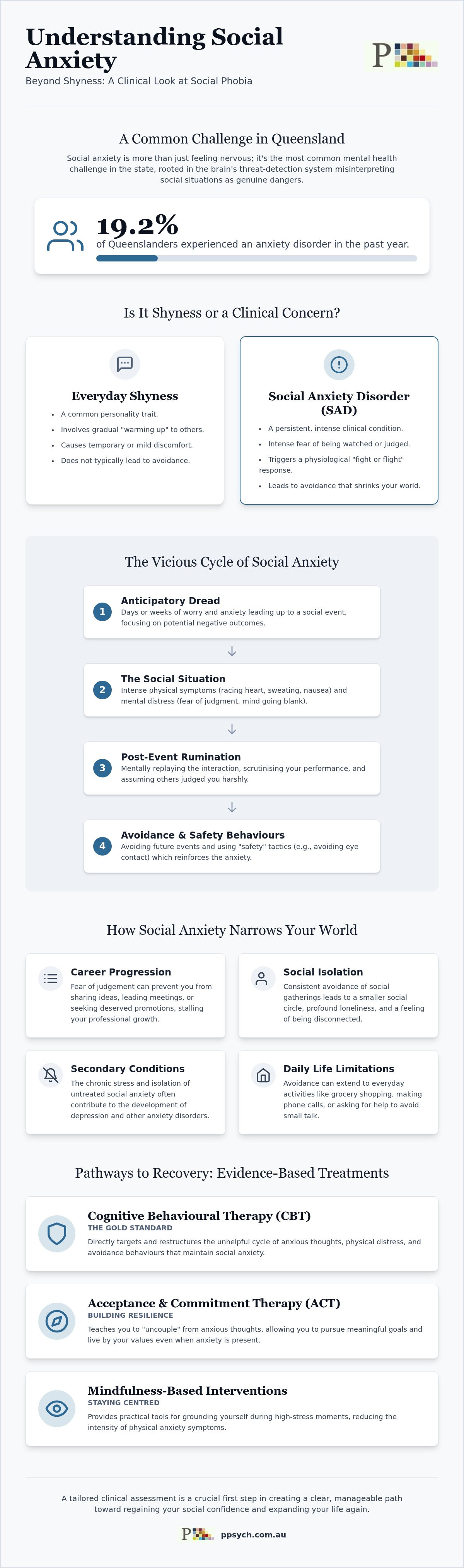
You are standing outside a local cafe or a colleague's birthday party, and your heart is already thumping against your ribs. Even though you want to be there, your mind is racing with the fear of being judged, and the urge to turn around and go home feels almost impossible to ignore. It is exhausting to live in a cycle of anticipatory dread and post-event rumination, where every social interaction feels like a performance you're worried you might fail. You aren't alone in this; in fact, approximately 19.2% of Queenslanders experienced an anxiety disorder in the past 12 months, making it the most common mental health challenge in our state.
If you're seeking social anxiety treatment sunshine coast, it's important to understand that there's a significant difference between simple shyness and clinical social phobia. This article explains how evidence-based clinical psychology can help you move beyond merely "coping" with your symptoms. We'll look at how restructuring cognitive patterns can reduce physical distress and provide you with the practical tools needed to attend social functions without weeks of dread, allowing you to finally feel present and secure in your daily life.
Table of Contents
Understanding Social Anxiety: When Shyness Becomes a Clinical Concern
Most people have felt a flicker of nerves before a big presentation or a first date. However, there's a distinct clinical line between everyday shyness and Social Anxiety Disorder (SAD). While shyness is often a personality trait that allows for gradual warming up to others, social anxiety is a persistent, intense fear of being watched, judged, or humiliated. When we provide social anxiety treatment sunshine coast, we often find that clients aren't just "quiet." They're experiencing a profound internal battle that makes even the most routine interactions feel like a high-stakes performance. A deeper Understanding Social Anxiety Disorder reveals that it's rooted in the brain's threat-detection system, which mistakenly identifies social scrutiny as a genuine physical danger.
Your body's "fight or flight" response doesn't distinguish between a predator in the wild and a boardroom full of colleagues. When this system is triggered in a social setting, it takes a heavy physical toll. Adrenaline floods your system, leading to a racing heart, shallow breathing, and a desperate urge to escape. This isn't a lack of willpower; it's a physiological reaction that can be incredibly difficult to manage without professional clinical tools. For many, the struggle continues long after the event ends. This is known as "Post-Event Processing," a mental trap where you replay every minute detail of an interaction, scrutinising your words and convinced that others viewed you unfavourably. This rumination keeps the anxiety alive, turning a single coffee catch-up into days of mental exhaustion.
Addressing these physical symptoms is often a multi-faceted process; for instance, incorporating exercise physiology or clinical Pilates through movemed.au can help individuals better regulate their nervous system and manage the bodily tension that social anxiety triggers.
Identifying the threshold for professional help usually involves looking at how much your world has shrunk. If you're choosing your career path based on how few people you'll have to talk to, or if you're avoiding the local shops to skip potential small talk, the anxiety has moved from a nuisance to a life-limiting condition. It's at this point that clinical intervention becomes essential to break the cycle of avoidance.
Establishing a connection with a dedicated mental health provider is a vital step toward recovery. For instance, clinics like Acceptance Pathway Psychiatry PLLC focus on providing comprehensive care and clinical pathways to help patients navigate their mental health journey effectively.
Common Signs and Symptoms of Social Phobia
Social anxiety manifests through a complex interplay of thoughts, physical sensations, and behaviours. You might notice your mind going completely blank just when it's your turn to speak, or you might be consumed by the fear that your hands will shake while holding a drink. Common physical indicators include blushing, nausea, and excessive sweating. To manage these, many people develop "safety behaviours." These might include avoiding eye contact, over-preparing every sentence before you speak, or always staying near an exit. While these habits feel like they're protecting you, they actually reinforce the idea that socialising is a threat.
The Impact on Daily Life and Mental Wellbeing
Untreated social anxiety rarely stays confined to one area of life. It can stall career progression, as the fear of judgement prevents you from sharing ideas or seeking well-deserved promotions. Over time, the strain of constant avoidance can lead to deep social isolation and a sense of loneliness. This isolation often contributes to secondary challenges, creating a complex link between social phobia and depression and anxiety. Addressing the root cause with a clinical psychologist is the most effective way to prevent these secondary conditions from taking hold and to start expanding your life again.
Evidence-Based Social Anxiety Treatment Frameworks
Retraining a nervous system that has become hypersensitive to social evaluation requires a methodical, structured approach. Recovery isn't about "trying harder" to be confident; it's about using proven clinical methods to change how your brain processes social information. When seeking social anxiety treatment sunshine coast, you'll find that clinical psychologists rely on a handful of Evidence-Based Treatments for Social Anxiety because they offer a clear, reliable roadmap for change. Cognitive Behavioural Therapy (CBT) remains the gold standard because it directly targets the cycle of anxious thoughts, physical distress, and avoidance behaviours.
While CBT focuses on modifying unhelpful patterns, other frameworks like Acceptance and Commitment Therapy (ACT) provide additional tools for resilience. ACT teaches you how to "uncouple" from uncomfortable thoughts, allowing you to pursue your goals even when anxiety is present. These approaches are often supported by mindfulness-based interventions. By learning to centre your mind during high-stress moments, you can lower your overall physiological arousal, making it easier to stay engaged in the conversation rather than being trapped in your own head.
Cognitive Restructuring: Challenging the Inner Critic
The "inner critic" associated with social phobia is often incredibly loud and remarkably convincing. Cognitive restructuring is the clinical process of putting those critical thoughts on trial. We work together to identify common "unhelpful thinking styles" such as mind-reading, where you're certain others are judging you, or catastrophising, where you believe a minor social slip-up will lead to total humiliation. By gathering objective evidence for and against these fears, you can develop a more balanced and compassionate internal dialogue. This isn't about forced "positive thinking" but about developing a realistic perspective that acknowledges your ability to handle social challenges.
Graded Exposure: Facing Fears at Your Own Pace
Exposure therapy is a powerful tool for desensitising the nervous system, but it's never about jumping into the deep end without support. A clinician helps you build a "fear hierarchy," which is a customised list of social situations ranked from least to most distressing. You might start with something small, like asking a stranger for the time, before gradually working up to more complex interactions. A vital part of this process is identifying and reducing "safety behaviours," such as checking your phone to avoid eye contact or over-rehearsing your words. As you repeatedly experience social success without these crutches, your brain learns that you are safe. If you're feeling overwhelmed by the prospect of socialising, you might find it helpful to speak with a senior clinical psychologist about creating a plan that moves at your pace.
Managing Anticipatory Anxiety: Breaking the Cycle of Dread
For many, the most exhausting part of social phobia isn't the conversation itself, but the days or weeks spent dreading it. This experience, known as anticipatory anxiety, is essentially a "fear of the future." It involves a persistent, anxious focus on upcoming events where you might feel exposed or judged. While some level of preparation is helpful, anticipatory anxiety often spirals into a cycle of mental rehearsals and worst-case scenarios. In the context of social anxiety treatment sunshine coast, we recognise that this "pre-event" distress is often more debilitating than the event itself, as it drains your emotional energy long before you've even left the house.
This dread creates a direct clinical link to avoidance behaviours. When the mental weight of an upcoming function becomes too heavy, the relief of cancelling feels like the only solution. However, this relief is temporary and actually strengthens the anxiety over time. Clinical psychology targets the root of this chronic worrying by helping you understand that your brain is attempting to "solve" a social threat that hasn't happened yet. By breaking down the process of Diagnosing and Treating Social Anxiety, clinicians can help you identify these patterns early, preventing the dread from dictating your schedule.
Practical Strategies for the "Pre-Event" Phase
Managing the lead-up to a social commitment requires intentional boundaries. One effective method is "time-limited worrying," where you allow yourself ten minutes a day to think about the event, after which you consciously pivot to other tasks. Before leaving the house, grounding techniques can help lower physical arousal. Try a simple sensory check: identify five things you can see, four you can touch, and three you can hear. Additionally, shifting your focus to "process goals"—such as simply arriving on time or asking one person a question—rather than "outcome goals" like being the most popular person in the room, can significantly lower the stakes. This logic also applies to travel; if you're visiting the tropical north, you can explore Cairns Airport Transfers to simplify your arrival and maintain your sense of calm.
Long-Term Anticipatory Anxiety Treatment
While short-term tools are helpful, long-term recovery involves using cognitive therapy to address the core beliefs that fuel the dread. Often, this means challenging deep-seated assumptions that you are somehow "inadequate" or that social slip-ups are "unbearable." Your psychologist will help you build a robust toolbox of coping mechanisms to handle unexpected triggers, ensuring you feel prepared for a variety of situations. Ultimately, it's important to realise that anticipatory anxiety is a manageable cognitive habit rather than a fixed personality trait.
The Clinical Consultation Journey: What to Expect
Taking the first step toward professional support is often the most difficult part of the recovery process. When you begin your journey for social anxiety treatment sunshine coast, you aren't just booking an appointment; you're starting a methodical partnership with a clinician who understands the nuances of social phobia. Your initial assessment is a foundational conversation designed to map out your unique history, identify specific triggers, and establish clear, achievable goals. This isn't a passive process. You and your clinical psychologist will work together to develop a tailored treatment plan that feels both manageable and purposeful.
The cadence of therapy is designed to provide steady, reliable support as you implement new strategies. Under a Mental Health Treatment Plan, most Australians can access Medicare rebates for up to 10 individual psychology sessions per calendar year. While the exact number of sessions required varies depending on the complexity of your symptoms, clinical tools are used throughout the journey to track your progress and measure the reduction in your anxiety levels. This data-driven approach ensures that the therapy remains effective and focused on your desired outcomes.
Medicare and Accessing Support in Australia
To access financial support for clinical psychology, your first port of call is your GP. They can provide a Mental Health Treatment Plan, which is essential for claiming Medicare rebates. As of July 2026, the rebate for a session with a Clinical Psychologist is $149.05. Choosing a practice that prioritises evidence-based care means your treatment will be grounded in established methodologies like CBT, which we explored earlier, ensuring you receive the highest standard of professional attention. If you're ready to start this process, you can book a consultation with our clinical team to discuss your needs.
Telehealth vs. In-Person Consultations
For those whose social anxiety makes attending in-person appointments particularly daunting, telehealth offers a gentle first step. Conducting sessions from the safety of your own home can lower the initial barrier to entry, allowing you to build rapport with your clinician without the added stress of a new physical environment. All digital consultations maintain the same high level of clinical privacy and professional rapport as face-to-face sessions. Many clients find that as their confidence grows through these initial interactions, they feel ready to transition to in-person visits at our Sunshine Coast clinic, consolidating their gains in a real-world setting.
Why Choose Professional Psychology Service for Your Recovery?
Dr Claire Cashman holds a doctorate in clinical psychology, leading a team of senior clinicians who are all fully registered with the Psychology Board of Australia. This level of advanced qualification ensures that Professional Psychology Service operates as a centre of excellence for complex anxiety cases. We understand that seeking social anxiety treatment sunshine coast requires significant courage, so we have cultivated an environment that is deeply compassionate and strictly non-judgmental. Our commitment to rigorous clinical supervision and the latest research standards means you receive care that is both stable and grounded in established best practices.
Whether you are seeking support for child psychology or are an adult navigating the complexities of social phobia, our practice provides comprehensive care across the lifespan. We believe that professional support should serve as a reliable anchor, providing the quiet strength you need to reclaim your confidence and social agency. By choosing a team of highly qualified senior psychologists, you are ensuring that your recovery is guided by experts who prioritise evidence-based outcomes and your long-term wellbeing.
Our Approach to Social Anxiety and Trauma
Social anxiety isn't always a standalone challenge. Often, these intense fears are deeply connected to past experiences or developmental hurdles that have shaped your view of the world. By integrating trauma-informed care into our treatment frameworks, we help you address the underlying causes of your distress while simultaneously building practical life skills. These skills are designed to be used in real-world settings, ensuring your progress continues well after you leave the consultation room. We are dedicated to supporting the local community with a national standard of clinical excellence, providing a high-quality alternative to more generic counselling services.
Take the First Step Toward Social Freedom
Starting your recovery journey begins with a clinical consultation, which can be conducted face-to-face or via telehealth if you prefer a more gradual introduction. To help manage any initial nerves, it's often helpful to prepare a few brief notes about your history or specific situations that trigger your anxiety. This small act of preparation can offer a sense of predictability and control during your first session. If you are ready to move toward a life defined by genuine connection rather than anticipatory dread, you can Enquire about social anxiety treatment at Professional Psychology Service today. Our team is prepared to guide you with the patience and expertise your journey deserves.
Reclaiming Your Social Confidence
Living with the weight of social phobia can feel isolating, but it's a condition that responds remarkably well to structured, professional support. You've explored how evidence-based frameworks like Cognitive Behavioural Therapy and Acceptance and Commitment Therapy provide more than just "coping" mechanisms; they offer a way to fundamentally retrain your nervous system. While many seek local care, professionals such as Brookhouse Hypnotherapy Manchester also utilise hypno-psychotherapy to help clients address the subconscious roots of these fears. By addressing the cognitive patterns of anticipatory dread and the physical symptoms of anxiety, you can begin to engage with your community on your own terms once again.
Similarly, for those exploring international resources for personal transformation, you can learn more about Paramount Shift and their specialised approach to supporting emotional well-being.
Professional Psychology Service provides a stable and supportive environment led by doctorate-level clinical experts. Our services are Medicare rebate eligible, ensuring that high-quality social anxiety treatment sunshine coast remains accessible to those who need it most. If you're ready to break the cycle of avoidance and rediscover your social agency, we are here to guide you with quiet strength and clinical expertise. Book a clinical consultation for social anxiety treatment today to begin your journey toward a more confident future. You've already taken the first step by seeking information; the next one is well within your reach.
Frequently Asked Questions
How do I know if I have social anxiety or if I am just shy?
Social anxiety is distinguished from shyness by its intensity and the degree to which it interferes with your daily functions. While a shy person might feel quiet in a group, someone with social anxiety often experiences a debilitating fear of being scrutinised or humiliated. This distress typically leads to the avoidance of essential career or social opportunities; this is a key indicator that professional support is required.
Can social anxiety be completely cured with clinical treatment?
Social anxiety can be managed so effectively that it no longer interferes with your quality of life. While some people may always feel a slight internal flutter in high-stakes moments, clinical treatment provides the tools to ensure these feelings don't lead to avoidance. Many individuals who complete evidence-based therapy report a significant reduction in physical symptoms and a newfound ability to enjoy social interactions.
How much does social anxiety treatment cost on the Sunshine Coast?
The cost of therapy on the Sunshine Coast depends on the clinic's fee structure and whether you are eligible for government support. Most private practices set their rates independently, though many align with industry benchmarks. It is best to contact a clinic directly to discuss their current session rates and to see how your Medicare rebate might reduce your total out-of-pocket expenses.
Do I need a referral from a GP to see a clinical psychologist for anxiety?
You can book an appointment without a referral, but you will need one from your GP to access Medicare rebates. Most Australians choose to obtain a Mental Health Treatment Plan first, as this allows them to claim a rebate for up to 10 sessions per calendar year. This plan makes clinical psychology significantly more affordable and ensures your GP is kept informed of your care.
How long does it take to see results from CBT for social phobia?
Many people start to experience a noticeable reduction in their anxiety levels within 8 to 12 sessions of structured therapy. The results often depend on your willingness to apply the cognitive tools and exposure exercises in your daily life. Consistent engagement with your social anxiety treatment sunshine coast plan is the most reliable way to achieve lasting changes in your confidence levels.
Is telehealth as effective as in-person therapy for social anxiety?
Telehealth has been proven to be just as effective as in-person consultations for the treatment of social phobia. In fact, many clients find that starting their journey via video call is less intimidating than visiting a clinic for the first time. This digital option provides a safe starting point that allows you to build a strong rapport with your psychologist from your own home.
What should I do if my child is showing signs of social anxiety at school?
If your child is struggling with social fears at school, the first step is to arrange a clinical assessment with a psychologist who specialises in children. Early intervention can help them develop resilience and social skills before these anxieties impact their academic performance or friendships. Your psychologist can also work with the school to ensure your child feels supported in the classroom environment.
Can social anxiety lead to other mental health issues if left untreated?
Untreated social anxiety often increases the risk of developing secondary conditions like depression or substance use issues. When a person's world shrinks due to avoidance, the resulting isolation can take a heavy toll on their overall mental wellbeing. Seeking professional social anxiety treatment sunshine coast early is a proactive way to protect your long-term mental health and maintain your career progression.


Comments